Monday, 26 November 2018

INSPACE 3, Satnogs, Wales Aerospace and SDR radios


Last week I ran the 3rd event in my INSPACE series of events which have all been hosted by North Wales Technology (INSPACE ONE HERE , INSPACE TWO HERE!). This INSPACE theme was Software Defined Radios (SDR) and the event was split into 2 main sections. I started the evening with a presentation about the Libre Space Foundation (LSF) and in particular the SatNOGS  project which is a global networked system of opensource satellite ground stations. I wanted to tell the story to the INSPACE audience for a couple of reasons. The main reason is I think it is an inspiring story how LSF have bootstrapped a plethora of space technologies, missions and projects in a unique way, not just opensource, but also outside of military and defence development methodologies. The second reason is that I had negotiated some sponsorship from  Aerospace Wales Forum to not only sponsor the INSPACE 3 event with pizza and drinks but also to sponsor a project to deliver the required hardware for a SatNOGs ground station install on one of  Bangor Universities buildings. Its excellent that they supported this project idea and also excellent that they came over to this event and support it on the night.


And what a night we had, after my talk about LSF and SatNOGs we heard from Richard who works for Glyndwr Innovations who told us about the varied payload development projects there are at the St Asaph Optical cluster and also about the high end engineering systems that are hosted within Glyndwr's campus. He went on to describe a recent program Glyndwr innovations ran to deliver some small funding grants to local startups for research and or engineering/validation with the funding coming from the UK space agency. It's excellent to see that there are organisations working to bringing this funding into North Wales to develop the space industry ecosystem here.

After some pizza networking the 2nd half of the evening was in the capable hands of Luke and Chris who hosted and informal workshop getting everyone started with RTL SDR's. These are a cheap USB dongle originally designed for use as digital TV receivers for laptops but they actually contain a very capable software defined radio receiver and as can be used for lots of radio usage (and indeed they underpin the whole of the SatNOGs ecosystem so it maintained the subject for the evening)!.

By the time we had finished everyone who wanted to had installed and got up and running with a SDR dongle on a variety of platforms, of course windows and linux and mac but also a few people used them with their android phones etc. We had some attempts at trying to hear a satellite outside the venue but with not perhaps the best antenna or indeed the best passes of satellites success was limited, we did mange to get an ADSB setup running and see some aeroplane transponders... but the cold quickly beat us back inside!


We finished the evening with Chris transmitting some SSTV Images... including the North Wales Tech logo and the attendees capturing and decoding the images, fabulous fun and I want to extend massive thanks to Chris and Luke for their help in running what I feel was another successful INSPACE event! Finally massive thanks also need to go to Carwyn from NW Tech who puts in astonishing amounts of work for the cause, Arleosi Pontio Innovation for once again hosting the event in their co-work space and Wales Aerospace Forum for the aforementioned sponsorship.


Thursday, 8 November 2018

New venture! Podcasting!


So yes... I've considered setting up a podcast for years and never got round to it... but just decided to go for it! Here is the first test episode with random sung intro music and a 5 minute anecdote... hopefully more to come! All suggestions and comments welcome.

Wednesday, 7 November 2018

Quick make! Making boxes useful with a 3d printer!


Aaaaaages ago my dad gave me a huge box full of these small 'raaco' stacking boxes that had been chucked out of a business somewhere and had been given to him. I have used a few on my workbench loose and they make really useful project boxes for holding small parts as I am working on something, or I've used them to sort electronic components when doing batch assembly. They also stack well but they don't have lid and I don't have a case for them which limits their use a bit. I keep contemplating making a larger box for them to stack into but then I had this little idea to 3d print some lids with holes for some cord, I can now fasten and transport them whilst keeping every thing safely inside making them much more useful! Using a bit of cord and a drawstring toggle means that the lid can close different multiples of boxes.

Also whilst I am here.. someone got in touch the other week and asked to make a donation to me as he had been inspired by a post on here! That was very cool and humbling, so in case anyone else wants to buy me a coffee I've added a donate button to the blog! Feel free to use it!

Tuesday, 30 October 2018

Proud to have a rocket article in Hackspace magazine!


Rather wonderfully a couple of months this back the mighty Hackspace magazine visited Midland Rocketry Clubs "Midland Sky" event and flew a couple of their own model rockets and met and chatted with everyone there. They explained they wanted to run some rocketry features in an upcoming issue... And indeed the have in issue 12. It's not all rockets but there's a good chunk of rocket articles in there covering model rocket 101, interviews with the mighty thrust vectoring Joe Barnard/BPS space and also an article by yours truly! Based on a document I wrote up off the back of my rocket design workshops my article takes people through designing and simulating a rocket using the Openrocket software. Really pleased to be included and hope it helps bring a few new people to look at rocketry. You can download a free pdf of Hackspace magazine via the website but can also order a print copy which also can be found in all good magazine stockists! 


Saturday, 27 October 2018

Scratch built 29mm rocket anchor point (Or why do things the easy way!)


So I am working on a design for a minimum diameter 29mm rocket air-frame which means that the motor directly fits into the complete internal diameter of the rocket with no space around it. Common practice with larger rockets is to use an internal motor mount tube mounted in some centring rings, the fore centring ring usually is where the builder will place an eyelet or lifting bolt that will be the anchor for the recovery system/parachutes etc.

Obviously without this centring ring you need to come up with a different solution. I want to have the option of using the motor ejection charge so needed something that gases can expand through but also it needs to be strong. I recently picked up 2nd hand an aluminium anchor point for a larger 38mm air-frame off another rocket builder via Facebook and a discussion followed about how with a smooth metal outer finish it was difficult to get them to adhere/epoxy to the inside of an air-frame. So my idea was to make a similar anchor point to receive a lifting eye but to make it slightly under size and then knurl it to be a better fit and to maximise the keying surface for when it is epoxied into the air frame tube. The knurling is pretty badly done and definitely not decorative but it is definitely going to allow a small amount of epoxy to create the strong bond needed.

So why the "Why do things the easy way" bit... Well... after a search of the material/scrap pile I didn't have a piece of aluminium of large enough diameter to make this component. So I have done it the hard way! I started of making a very crude casting from some melted aluminium! With my very dinky little kiln!


I then poured the melt into a crude mould made from some of my diy casting sand (silica play sand and bentonite clay sourced from cat litter (unused... I a NOT that much of a cheapskate!)


The crude casting was then chucked up in the lathe (the cheap 2nd hand mini lathe I bought a while back) and turned to round.


I then realised none of the suitable boring tools I had actually fit in the toolpost of the mini lathe so I parted off the job and transferred it to my old faithful perfecto lathe and bored out the inside. Its somehow more pleasing when you really have made something from scratch!

Friday, 5 October 2018

One Mix Yoga review


For many years I have been a fan of ultraportables... I owned (and still have) an original eee pc701 when they came out and I have owned a litany of PDA devices over the years and regular readers (a select group of amazing individuals) may recall I recently got Linux up and running on my linx1010b tablet.

I'd lusted a lot after a gpd pocket when they were released last year but the lack of an SD slot put me off. I loved the form factor however and so when I saw the very similar One Mix Yoga which has an SD slot I decided to take the plunge. The final push was that it had a backlit keyboard... Great for a bit of late night browsing or indeed checking a rocket simulation in a tent at a rocketry meet!

It's a great machine, preconfigured with Windows 10 it boots quickly and everything works. Mine had a stuck pixel on arrival but I am happy to report that it unstuck with some usage and has resolved. I'm not really a windows fan but do reluctantly use it occasionally so the plan was to try and get it dual booting windows and some flavour of Linux.

I'd seen that a few things weren't working for people under Linux on the one mix yoga, most noticeably sound, so I was prepared for some issues. I was also prepared after my linx 1010 Linux experiences to have some screen orientation issues to resolve. I tried 3 or 4 Ubuntu flavoured distros before settling on the most recent version of Ubuntu Mate. Having tried lubuntu, xubuntu and vanilla Ubuntu I was struggling to get screen resolution correct (it's a pretty hi Res screen) and was therefore delighted to click the Hidpi option in Ubuntu mate which instantly resolved all my tiny icon/font/cursor issues. I found that I could make my screen orientation settings persist under Ubuntu mate and I quickly resolved and got screen brightness controls working. WiFi works and hibernation is good... But I still haven't found time to resolve getting sound working or indeed swapping the axis on the touchscreen... An issue I faced and resolved on the linx 1010b.

So it's now setup to dual boot and this works well.. giving me an ultraportable linux box for doing bits of work on the go but I can also boot into windblows if I require a bit of surfing/media/youtube.


It is amazingly portable... Fits into a cargo pants pocket easily and is pretty lightweight. Despite having a slightly slower processor than the gpd pocket I find it's fine for some libreoffice on the go or for a bit of Openrocket rocket design work. The reversible hinged screen makes it an excellent ereader and flipping the screen disables the keyboard which means you don't disturb your reading with random keypresses.

Friday, 28 September 2018

Open Source Cubesat Workshop 2018

As Red would say "YES"!

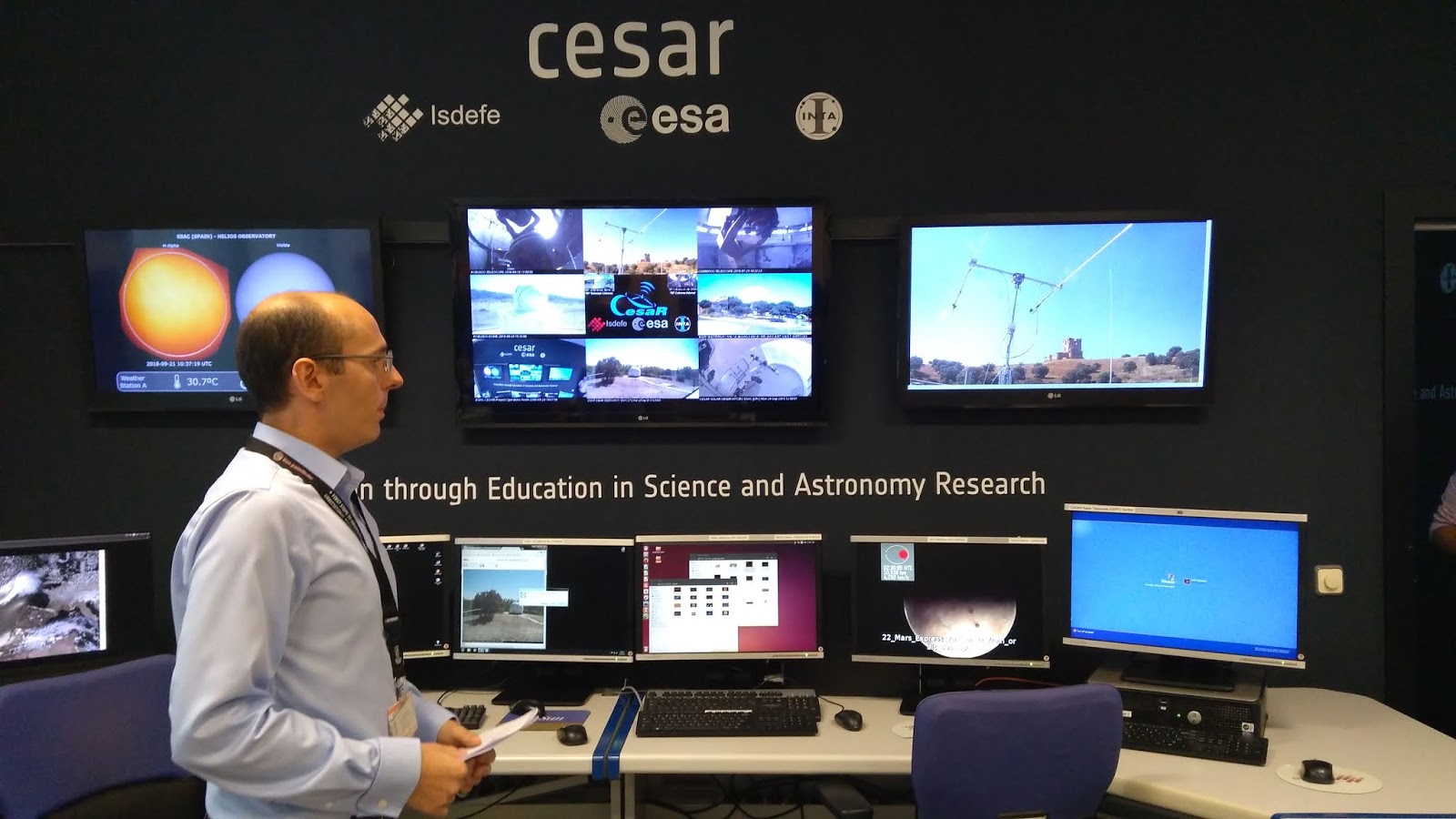
I had the pleasure of travelling to this years OSCW that was once again hosted at an European Space Agency campus ESAC the European Space Astronomy Centre just outside Madrid, Spain. I equally had the pleasure of staying with the Libre Space Foundation crew including some of the core team but also some of the global contributors.

There is so much I could say about the talks and the event but I don't know how to summarise it all! So instead I will just say that the quality of presentation was great and it really is re affirming and heartening to see so many communities forming around the opensource development of space technologies. Staying with and meeting some of the wider Librespace contributors makes one feel part of something amazing and left me invigorated and wanting to contribute more. Here follows a small photo dump!